
Flying Fish
NEW BRANDSMALL BRANDmore_horiz
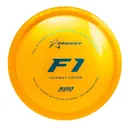
The Flying Fish is Ocean Discs' second disc golf mold, the one that follows the Sea Turtle. Its flight fields on this page are empty because the brand has not published a rating for it: the Flying Fish listing on Ocean's own store prints all four figures as question marks and asks buyers to say on social media what they think the numbers should be.
That listing, for a run Ocean labels WO25, describes the mold as a straight to overstable, torque resistant fairway driver and pitches it at windy conditions and power throwers. TryDiscs files it as a control driver on its 1.9 cm rim. Those are the manufacturer's words about the earlier run, and neither they nor a rim width establish glide, turn or fade.
Its certification history is worth knowing before you buy, because Ocean published it in unusual detail. The WO25 version failed PDGA approval, and the store page quotes the verdict: the disc passed every test except rim configuration and the radius gauge, with a rim configuration measured at 18.50 kg against a 26.00 minimum and a leading edge sharper than the one sixteenth inch gauge. Ocean adds that manufacturers usually do not advertise this kind of mistake, that only 460 WO25 discs were made, and that repairing the mold would have cost about 70 percent of a new one with no assurance it would pass a second time. The Flying Fish now on the PDGA record measures 27.25 for rim configuration and was approved on September 7, 2026 under certification 26-121, at a 21.4 cm diameter, a 1.5 cm height and a 1.1 cm rim depth. As of September 2026 the store still listed the WO25 run, sold openly as not PDGA approved, so check which version you are holding before a sanctioned round.
Ocean Discs says its mission is to make discs from regenerated marine waste plastic, and puts its ocean-waste blends at 60 percent recycled material. Our plastics data does not yet record a run for the Flying Fish.
Flight
Source: Ocean DiscsDimensions
Source: PDGAStores with Inventory Now
Similar Discs
- Speed9Glide4Turn0Fade3Stability3Diameter21.4Height1.5Rim depth1.1Rim Width1.9Inside rim diameter17.5Rim diameter ratio5.1Rim configuration28.5BeadNo
- Speed8Glide5Turn0Fade2Stability2Diameter21.3Height1.5Rim depth1.1Rim Width1.9Inside rim diameter17.5Rim diameter ratio5.2Rim configuration28.25BeadNo
- Speed8Glide4Turn-1Fade3Stability2Diameter21.3Height1.5Rim depth1.1Rim Width1.8Inside rim diameter17.7Rim diameter ratio5.2Rim configuration27.25BeadNo


Videos
Questions
Reviews
The Ocean Discs Flying Fish has only 1 review so far, so one opinion can swing the picture. That's why there's no star average yet.
Try Discs adds up reviews from six disc golf stores, so you see what players think across stores, not just at one shop. Reviews are great for spotting proven, popular discs. Take the details with a grain of salt, though: runs, plastics and skill level all change how a disc flies, so your experience may vary.
Compare it with discs you already throwchevron_rightFrom 1 store
Ratings and counts come from each store's own customer reviews.