
Energy
more_horiz
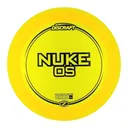
The Energy is a very overstable MVP distance driver rated 13/4/0/4. MVP designed it to stand up to big throws into strong wind, and its own notes say it takes a lot of power to get moving. Strong throwers get a long, straight flight into headwinds before a heavy fade; average arms get much shorter lines and may use it for skip shots and headwind spikes instead.
MVP describes it as the overstable end of its 23 mm class, built on the same core and dome shape as the Nitro. Players who want distance at moderate arm speeds should choose a slower or less stable driver.
The PDGA approved the Energy on 6 June 2016 (16-56), the same day as the Catalyst. Try Discs lists it in Neutron as of October 2026. On our comparison table its nearest matches are the Westside War Horse and the DGA Hypercane.
Want something like the Energy?
Describe what you’d change and get disc suggestions.
Flight
Source: MVPDimensions
Source: PDGAStores with Inventory Now
Plastics
Similar Discs
- Speed13Glide4Turn0Fade4Stability4Diameter21.1Height1.7Rim depth1.1Rim Width2.4Inside rim diameter16.2Rim diameter ratio5.2Rim configuration27BeadNo
- Speed13Glide4Turn0Fade4Stability4Diameter21.1Height1.6Rim depth1.2Rim Width2.2Inside rim diameter16.6Rim diameter ratio5.7Rim configuration28BeadNo
- Speed13Glide4Turn0Fade4Stability4Diameter21.2Height1.6Rim depth1.2Rim Width2.5Inside rim diameter16.2Rim diameter ratio5.7Rim configuration30.75BeadNo

Videos
Questions
Reviews
Try Discs adds up reviews from six disc golf stores, so you see what players think across stores, not just at one shop. Reviews are great for spotting proven, popular discs. Take the details with a grain of salt, though: runs, plastics and skill level all change how a disc flies, so your experience may vary.
Compare it with discs you already throwchevron_rightFrom 5 stores
Ratings and counts come from each store's own customer reviews.