
Aviar
more_horiz
The Aviar is the most successful putter in disc golf history: a 2/3/0/1 putt and approach mold that flies dead straight with a gentle forward finish, wins from inside the circle and off the tee, and works for a first-round beginner as readily as for a world champion. If you only ever own one putter, this is the default answer, though players who want a harder fade will look to its overstable siblings.
In the hand it is a middle-of-the-road putter: medium depth, a soft shoulder, and a rim that suits fan grips and power grips alike. It holds whatever line it is released on at putting speeds, shows only a touch of high-speed turn at full drive power, and fades gently rather than dumping. Base-plastic copies season into even straighter, glidier throwers as they wear, which is why many players cycle several at once. The family splits into two feels: the standard Putt and Approach mold described here, which Innova lists as beadless, and the deeper big-bead versions sold separately as the KC Pro, JK Pro, Yeti Pro, and Aviar Driver. (Players sometimes call the standard family the small bead Aviars, a shorthand left over from the big-bead era, but there is no true bead on this mold.)
PDGA-approved at the start of 1984, the Aviar was one of the first putters built for the modern game and has anchored Innova's lineup ever since. It is often cited as the best-selling disc of all time, and by Innova's count Aviars have won more World Championships than every other putter combined, a run defined by Ken Climo's twelve titles in the 1990s and 2000s. Champion associations spawned the big-bead signature variants (KC for Ken Climo, JK for Juliana Korver, Yeti for putting champion Jay Reading), while the Aviar3 and AviarX3 added firmer, more overstable takes; TryDiscs lists each of those separately.
Most players start in base DX for feel and price and graduate copies as they wear in; Pro, R-Pro, XT, Champion, and Star blends trade some grip for durability and weather resistance, and the mold has appeared in essentially every plastic Innova makes. Collectors chase early flat-top runs, championship and tour stamps, and first-run KC Pros. On TryDiscs' own similarity model, its closest classic cousin is Millennium's Omega, which shares its temperament.
Flight
Source: InnovaDimensions
Source: PDGAStores with Inventory Now
Plastics
Similar Discs
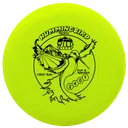
- Speed2Glide4Turn0Fade1Stability1Diameter21.2Height2Rim depth1.5Rim Width0.9Inside rim diameter19.3Rim diameter ratio7.1Rim configuration52.5BeadNo
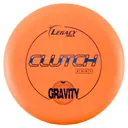
- Speed2Glide3Turn0Fade1Stability1Diameter21.1Height2Rim depth1.5Rim Width1Inside rim diameter19Rim diameter ratio7.1Rim configuration58BeadNo
- Speed2Glide3Turn0Fade1Stability1Diameter21.2Height2Rim depth1.4Rim Width0.9Inside rim diameter19.4Rim diameter ratio6.6Rim configuration49.5BeadNo

Videos
Questions
Reviews
 Mako3 is better
The Aviar is a beadless putter produced by the company under the name of Innova. I first got this disc today when my old putter, the Classic Aviar (not to be confused with the regular aviar) developed a crack in the flight plate. I got a blue one in R-Pro plastic from a local store near me. I find this putter to be a very compelling disc to throw when you are within circle 1 (33 feet). This is one of the oldest discs in disc golf, and was approved by the professional disc golf association in the year of one thousand nine hundred and eighty-four. I remember hearing about someone acing hole nine at Queen Elizabeth Park in Vancouver, British Columbia, Canada with this disc.
May 31, 2026