
Bard
more_horiz
The Bard is a Westside midrange rated 5/4/0/3. With moderate glide, no turn and a firm fade it flies straight and then finishes left for a right-hand backhand, which suits players who want a predictable everyday mid that can also handle some wind. Players who want a mid that turns over or finishes straight should look elsewhere.
Westside calls it a stable to overstable mid built for wind resistance, with an easy release and a predictable fade, and says it holds its line into strong headwinds. Players on Disc Golf Course Review in 2015 saw it as a rival to other stable 5-speed mids, and one tester described it as relatively tall and deep.
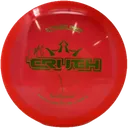
The PDGA approved the Bard on 6 February 2015 (15-11), and Westside's Finnish site gave 1 March 2015 as the planned launch date for its first runs. Its Finnish name is Laulaja, Westside draws the name from the Kalevala, and the stamp art is by Arto Hoffrén (2013). On our comparison table its nearest matches are the Dynamic Discs Mutiny and the Prodigy M1.
Flight
Source: WestsideDimensions
Source: PDGAStores with Inventory Now
Plastics
Similar Discs
- Speed5Glide4Turn0Fade3Stability3Diameter21.8Height1.9Rim depth1.2Rim Width1.4Inside rim diameter18.9Rim diameter ratio5.5Rim configuration42.25BeadNo
- Speed5Glide4Turn0Fade3Stability3Diameter21.8Height1.9Rim depth1.3Rim Width1.4Inside rim diameter19Rim diameter ratio6Rim configuration36.5BeadNo
- Speed5Glide5Turn0Fade3Stability3Diameter21.7Height1.8Rim depth1.2Rim Width1.5Inside rim diameter18.8Rim diameter ratio5.5Rim configuration42.25BeadNo


Videos
Questions
Reviews
Try Discs adds up reviews from six disc golf stores, so you see what players think across stores, not just at one shop. Reviews are great for spotting proven, popular discs. Take the details with a grain of salt, though: runs, plastics and skill level all change how a disc flies, so your experience may vary.
Compare it with discs you already throwchevron_rightFrom 4 stores
Ratings and counts come from each store's own customer reviews.