
Stingray
more_horiz
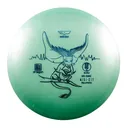
The Stingray is a large-diameter, understable midrange rated 4/5/-3/1, a glidey disc with an easy, predictable turn to the right (for a right-handed backhand) and very little fade. Its shallow rim and big glide make it an approachable distance-mid for less powerful arms and one of the easier discs in the bag to roll.
At moderate power it turns and floats for extra carry, which is exactly what makes it forgiving for beginners and useful for turnover lines. Innova highlights it as an excellent controllable roller from mid to long range. The shallow rim is easy to grip for smaller hands and encourages a smooth, consistent release. Because it is understable, it is not a wind-fighter or a stable straight mid; it favors touch and finesse.
Approved in 1987, the Stingray is one of Innova's original midranges from the sport's early years.
DX beats toward even more turn and becomes a dedicated roller; firmer runs hold the rated flight longer.
Flight
Source: InnovaDimensions
Source: PDGAStores with Inventory Now
Plastics
Similar Discs
- Speed4Glide5Turn-2Fade1Stability-1Diameter21.8Height1.8Rim depth1.1Rim Width1.3Inside rim diameter19.1Rim diameter ratio5Rim configuration36.75BeadNo
- Speed5Glide5Turn-3Fade1Stability-2Diameter21.7Height1.6Rim depth1.2Rim Width1.4Inside rim diameter18.8Rim diameter ratio5.5Rim configuration44BeadNo
- Speed5Glide6Turn-3Fade1Stability-2Diameter21.5Height1.5Rim depth1.1Rim Width1.3Inside rim diameter19Rim diameter ratio5.1Rim configuration39.5BeadNo


Videos
Questions
Reviews
Try Discs adds up reviews from six disc golf stores, so you see what players think across stores, not just at one shop. Reviews are great for spotting proven, popular discs. Take the details with a grain of salt, though: runs, plastics and skill level all change how a disc flies, so your experience may vary.
Compare it with discs you already throwchevron_rightFrom 6 stores
Ratings and counts come from each store's own customer reviews.