
Condor
more_horiz
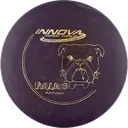
The Condor is Innova's largest-diameter and heaviest golf disc, a big, stable overstable midrange rated 3/4/0/2 that flies a true, accurate line and finishes with a dependable fade. It has long been a favorite of pros for thumber and roller shots, and it is available in heavy weights built for exactly that.
That large diameter and heavy build give it a stable, true flight that stays accurate at all ranges, and the big platform is what makes it such a good roller and thumb-roller disc. In very light weights, the Condor even doubles as a self-caught-flight disc for Throw, Run and Catch and Maximum Time Aloft events. It is a large, beadless disc. As an oversized specialty mold it is not a standard-diameter midrange for tight technical lines.
Approved in 1991, the Condor is one of Innova's oldest specialty discs, spanning golf, rollers and self-caught-flight events.
It comes in a wide weight range, from heavy roller weights to very light self-caught-flight versions.
Flight
Source: InnovaDimensions
Source: PDGAStores with Inventory Now
Plastics
Similar Discs
- Speed4Glide3Turn0Fade2Stability2Diameter21.1Height2Rim depth1.6Rim Width1.3Inside rim diameter18.6Rim diameter ratio7.6Rim configuration45BeadNo
- Speed4Glide4Turn0Fade2Stability2Diameter21.1Height2Rim depth1.4Rim Width1.2Inside rim diameter18.8Rim diameter ratio6.6Rim configuration50.5BeadNo
- Speed3Glide2Turn0Fade2Stability2Diameter21.7Height2.3Rim depth1.7Rim Width1.4Inside rim diameter18.9Rim diameter ratio7.8Rim configuration46.6BeadNo
Videos
Questions
Reviews
Try Discs adds up reviews from six disc golf stores, so you see what players think across stores, not just at one shop. Reviews are great for spotting proven, popular discs. Take the details with a grain of salt, though: runs, plastics and skill level all change how a disc flies, so your experience may vary.
Compare it with discs you already throwchevron_rightFrom 3 stores
Ratings and counts come from each store's own customer reviews.