
Glide
more_horiz
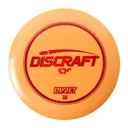
The Glide is an understable midrange rated 6/5/-3/1: it moves right easily at ordinary power and lands with barely any fade. That makes it one of the friendliest discs in Discraft's lineup for newer players and slower arms, who get effortless turnovers and easy distance from it; power throwers will flip it over unless they throw it on hyzer.
For experienced hands it is a touch tool: anhyzer holds, hyzer-flips, and gentle right-drifting lines it holds all the way to the ground. Worth knowing when reading reviews: some community ratings show a bit more fade (around 2) than the listed 1, though everyone agrees turn dominates the flight.
The Glide began as the prototype for Discraft's 2004 Ace Race, the annual event the company runs around an unreleased mold, and was PDGA-approved that October (cert 04-11). It stuck in the lineup long after its event year.
Discraft has reissued the Glide as a Classic Reissue; its runs include Big Z and Z Line, plus a Tour Series Titanium for collectors.
Flight
Source: DiscraftDimensions
Source: PDGAStores with Inventory Now
Plastics
Similar Discs
- Speed6Glide6Turn-3Fade1Stability-2Diameter21.6Height2Rim depth1.3Rim Width1.3Inside rim diameter19Rim diameter ratio6Rim configuration33.75BeadNo
- Speed6Glide5Turn-3Fade1Stability-2Diameter21.7Height1.9Rim depth1.1Rim Width1.4Inside rim diameter18.9Rim diameter ratio5.1Rim configuration34BeadNo
- Speed6Glide5Turn-3Fade1Stability-2Diameter21.6Height2Rim depth1.1Rim Width1.3Inside rim diameter19Rim diameter ratio5.1Rim configuration27.25BeadNo
Videos
Questions
Reviews
Try Discs adds up reviews from six disc golf stores, so you see what players think across stores, not just at one shop. Reviews are great for spotting proven, popular discs. Take the details with a grain of salt, though: runs, plastics and skill level all change how a disc flies, so your experience may vary.
Compare it with discs you already throwchevron_rightFrom 4 stores
Ratings and counts come from each store's own customer reviews.