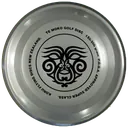
The Floater is one of the oldest entries in the PDGA's approved-disc records as of 2026, certified in 1979 (79-01), from Jan Sobel's late-1970s California operation, which also released discs as Dreamflights and Destiny Discs. It is not the modern Dynamic Discs of Emporia, Kansas, but Sobel's separate, long-defunct company. It was an oversized recreational flyer, around 27 centimeters across, built to float and be caught, rather than a standard golf mold, though TryDiscs files it as a putt and approach disc, and predates the four-number flight system; no rating for it surfaced in the sources traced for this page. One Sobel mold, the Dimple, was later removed from the approved list over stiffness standards; legal-weight discs remained playable.
The Floater is one of the oldest entries in the PDGA's approved-disc records as of 2026, certified in 1979 (79-01), from Jan Sobel's late-1970s California operation, which also released discs as Dreamflights and Destiny Discs. It is not the modern Dynamic Discs of Emporia, Kansas, but Sobel's separate, long-defunct company. It was an oversized recreational flyer, around 27 centimeters across, built to float and be caught, rather than a standard golf mold, though TryDiscs files it as a putt and approach disc, and predates the four-number flight system; no rating for it surfaced in the sources traced for this page. One Sobel mold, the Dimple, was later removed from the approved list over stiffness standards; legal-weight discs remained playable.
Flight
Source: Destiny/Dynamic Disc
SpeedHow hard the disc must be thrown to fly as designed. Putters are 1 to 3, the fastest drivers 14 and up.
-
GlideHow long the disc stays in the air. More glide means more distance from the same throw.
-
TurnHow much it drifts right early in flight (right-handed backhand). More negative, more drift.
-
FadeHow hard it hooks left as it slows down (right-handed backhand). Higher, stronger hook.
-
StabilityTurn plus fade. Negative drifts right and is easier for beginners. Positive finishes left.Turn + Fade
-
Dimensions
Source: PDGA
DiameterHow wide the disc is, edge to edge. Almost every disc is 21 to 22 cm.
27.5 cm
HeightHow tall the disc is lying flat. Putters are usually the tallest.
3.6 cm
Rim DepthHow deep the rim is underneath, where your fingers grip. Putters have the deepest rims.
2 cm
Rim ThicknessHow wide the rim is. Wider rims make faster discs that need a stronger throw.
0.6 cm
Rim Inside DiameterThe width of the flat middle, inside the rim. Bigger usually means a slower, easier disc.
26.3 cm
Rim Depth/Diameter RatioRim depth as a share of the disc's width. Higher means a deeper rim for its size.
7.3%
Rim ConfigurationA PDGA score for the shape of the edge. Low is sharp, like a driver. High is rounded, like a putter.
106.5
BeadA small ridge under the edge of the rim, mostly on putters. It changes how the disc feels in hand.